
Bangalore
Thursday, 27 August 2026
Venue to be announced
24 seats
Request a seat in BangaloreBangalore, Mumbai and Delhi NCR · August to October 2026
The Contract Room is a half-day workshop in which in-house legal teams learn agentic tools by negotiating a live agreement against each other.
A workshop series by Leela Works.
One morning
Why it exists
Most in-house legal teams have now sat through a vendor demonstration of Harvey, Legora or Lucio, and a fair number hold a licence that somebody on the team opens twice a month. A demonstration of this kind is difficult to argue with, because what it shows is real: software of this class will extract every limitation-of-liability provision from a hundred-page agreement in a few seconds, and will cite each provision to the clause it came from. What no demonstration has yet changed is the way the team’s own work gets done. The counterparty draft that arrives on a Monday morning is still reviewed and marked up by hand, much as counterparty drafts have been reviewed and marked up for the past fifteen years.
The distance between what the software can do and what a legal team actually does with it will not be closed by another demonstration. That distance closes the first time a team takes an agreement through to a settled position with the software doing the work, against a counterparty that pushes back on every clause. The Contract Room exists to provide that first occasion.
What happens
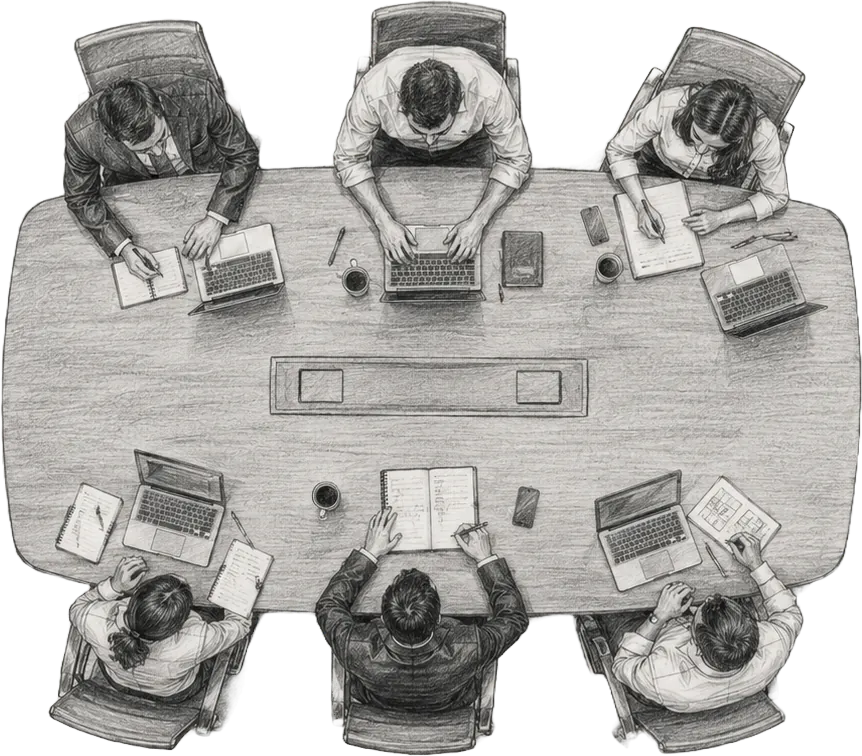
At nine o’clock a master services agreement will arrive in your inbox, together with a client brief that only your side of the room receives. The brief sets out what the business wants from the transaction, how much risk it is prepared to carry, and the walk-away position you are instructed not to disclose. Your team will then have seventy minutes to review the draft, settle an issues list, agree its positions, and send a redline across the room.
The counterparty’s markup will come back after the interval, and the second round runs with less time than the first. By half past one your team will either have settled the agreement or have recorded precisely where the negotiation broke down, and the positions you argued through the morning will have been written into a playbook that you can open at work on Monday.
The morning is set out session by session on the programme page.
12.4The Supplier’s entire aggregate liability arising under or in connection with this Agreement shall in no circumstances not exceed the Charges paid or payable in the twelve months preceding the claim, save that nothing in this clause 12.4 limits liability for a breach of clause 9 (Confidentiality).
The document your team sends across will look like this: a clause of the counterparty’s draft, amended and returned under tracked changes, with the numbering and the cross-references intact. The team on the other side of the room will have forty minutes to decide how much of the markup they are prepared to accept.
For the avoidance of doubt
Who it is for
The programme is designed for in-house counsel and general counsel who negotiate commercial contracts as part of the job, and who therefore hold settled views on indemnity carve-outs, termination rights, and the shape of a reasonable liability cap.
Delegates arrive from two directions. Some have never opened a legal AI tool and want to find out what one is actually good for. Others hold a Harvey or Legora licence that nobody on the team has yet found a real use for. The programme assumes you are fluent in contracts and assumes nothing whatever about the software.
The programme is not aimed at private practice, and it is not an introduction to drafting. If you have never negotiated an agreement of your own, this is the wrong room.
What you leave with
You will go home with the playbook your team built: the wording your team preferred on each clause that mattered, the fallback it was willing to price, and the point at which it would have walked away. You will also take away every redline your team produced, together with the printed workbook you worked from.
You will also leave with a method: instruct the software, require it to cite each point to the clause the point arises from, check its output against the text, and write the settled position down so that nobody argues it from scratch again. A method of that kind survives a change of vendor, because a playbook records your organisation’s positions rather than any supplier’s software.
The seat fee is ₹12,500 plus GST.
The fee covers your seat, a working account for the morning, the agreement itself, and the printed workbook you take home. We raise a tax invoice to your organisation against the particulars you give us when you register.
Three cities
Thursday, 27 August 2026
Venue to be announced
24 seats
Request a seat in BangaloreThursday, 17 September 2026
Venue to be announced
24 seats
Request a seat in MumbaiThursday, 15 October 2026
Venue to be announced
24 seats
Request a seat in Delhi NCRWho teaches it

Tripti Mody Sheth
Co-founder, Leela Works

Vivek Durai
Founder, Leela Works
Tripti negotiated software and procurement contracts for two decades, at Reliance Infocomm and Affiliated Computer Services and then in her own practice. Vivek practised at Nishith Desai Associates, AZB & Partners and Atman Law before he left to build software. They teach every session in every city, and one of them is always on the floor while you work. Their full notes are at /faculty.
The room holds twenty-four lawyers, and a team of your peers will test every position your team takes.
Requests close three days before each edition, or as soon as the seats are taken.